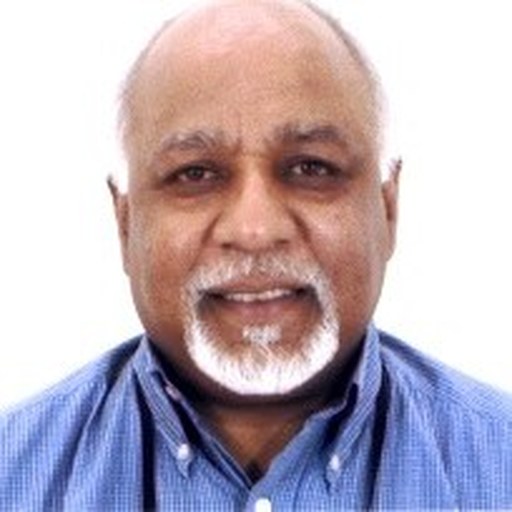
A. Dyalchand
FounderFounder of Institute of Health Management Pachod (IHMP)
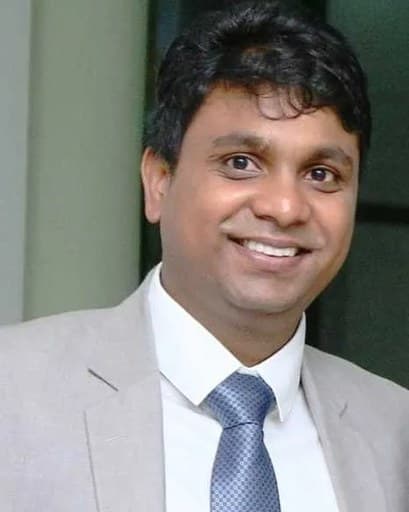
A. Dyalchand is the founding trustee of Institute of Health Management Pachod (IHMP)[1], an Indian non-profit working on healthcare and women & children from Pachod.
Ashok Dyalchand is an Indian public health physician and the founder-director of the Institute of Health Management, Pachod (IHMP), a public health research, service and training organisation based in the Aurangabad district of Maharashtra with a branch in Pune. IHMP operates under the Ashish Gram Rachna Trust.
A public health professional with more than four decades of experience, he has worked on primary health care, reproductive and child health, adolescent health, HIV/AIDS and community ophthalmology, and has campaigned for many years against child marriage and for the rights of girls in India.
Early life and education
Dyalchand trained as a doctor and is an ophthalmologist by education.
Career
IHMP dates its beginnings to 1976, when a young medical graduate began working from a five-bed hospital at Pachod, a village in Aurangabad district of Maharashtra that had been badly affected by famine. Two years later a team of two doctors, a nutritionist and a demographer was formed and began a comprehensive health and development project across 52 villages with a population of about 60,000.
IHMP pioneered the training of traditional birth attendants, known as dais, and was the first organisation in India to run a maternal and neonatal health programme through them, an approach later taken up nationally. Its work has covered maternal and neonatal health, malnutrition, sanitation, communicable and non-communicable diseases, reproductive and child health services, life-skills education for adolescent girls and gender sensitisation among boys and young men, in villages and in urban slums.
In 1986 IHMP opened a training centre offering practical skills in public health, and by 1990 it had become a nationally and internationally recognised training centre; more than 10,000 health workers from Indian non-profit and government bodies and from South Asian and African countries have trained there. The institute extended its work to Pune in 1996, developing public health models for urban slums, and in 2005 was invited by the Government of India to sit on the task force formulating the National Urban Health Mission policy.
From 1998 IHMP began working directly with adolescent girls, developing a life-skills programme intended to delay the age of marriage, and from 2003 with married adolescent girls and their husbands. The institute has run girls' clubs, in which unmarried girls receive life-skills education, and boys' clubs, in which boys and young men learn about child marriage, girls' rights and gender equality. IHMP reports that in the area where it works the average age at which girls are married has risen from 14 to 17.
Recognition
In 2019 Dyalchand was chosen by children voting worldwide as the World's Children's Prize Child Rights Hero of the Year, an award presented by the World's Children's Prize Foundation of Sweden and often described in the media as the children's Nobel prize, in recognition of his work for the rights of the girl child.[2][3][4][5]
Institute of Health Management Pachod (IHMP)
IHMP designs and runs public health programmes focused on maternal and child survival, adolescent girl empowerment and delayed marriage and pregnancy in rural and slum communities around Pachod, Maharashtra, with an additional office in Pune.
Institute of Health Management Pachod (IHMP) reports the following, on its own site:
- 7,500,000+ beneficiaries of IHMP's public health services since its inception
- 127,000 married adolescent girls reached with sexual and reproductive health services
- 103,000 unmarried adolescent girls empowered through life skills education
- 10,350 health personnel and district health officials trained by IHMP


Inspired by A.'s work?
Support Institute of Health Management Pachod (IHMP)Other changemakers
See all → Badruddin AjmalAjmal Foundation
 Rippan KapurCRY - Child Rights and You
 Anjali TendulkarSachin Tendulkar Foundation
 Girish KulkarniSnehalaya
 Muthulakshmi ReddyCancer Institute (WIA)
 Sachin TendulkarSachin Tendulkar Foundation
 Shaila BrijnathAasraa Trust
 Sri Sathya Sai BabaSri Sathya Sai Central Trust
 Sushila NayarMahila Dakshata Samiti
 Adhik KadamBorderless World Foundation
 Aparna HegdeARMMAN
 Devendra KumarLadli Foundation Trust