
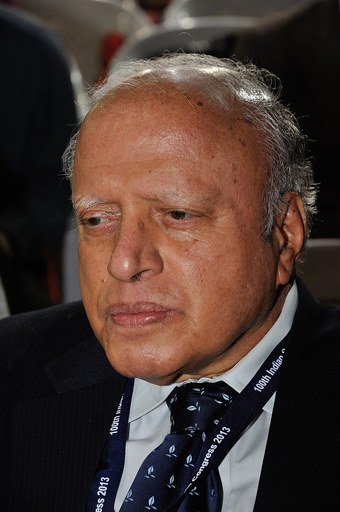
M. S. Swaminathan
FounderFounder of National Foundation for India (NFI)
Photo: Wikimedia (CC BY-SA)
M. S. Swaminathan is the founding trustee of National Foundation for India (NFI) (1990)[1], an Indian non-profit working on human rights and livelihood from New Delhi.
Mankombu Sambasivan Swaminathan (7 August 1925 - 28 September 2023) was an Indian geneticist, plant breeder and agricultural administrator, best known for his leading role in the Green Revolution in India, which introduced high-yielding varieties of wheat and rice and helped the country reach self-sufficiency in food grains.
Swaminathan was one of the group of public figures who established the National Foundation for India in 1992, an independent Indian grant-making foundation supporting civil society action. He also founded the M. S. Swaminathan Research Foundation in Chennai, which works on sustainable agriculture and rural livelihoods.
Early life and education
Swaminathan was born in Kumbakonam in the Madras Presidency. His father died when he was eleven. He had intended to study medicine, but the Bengal famine of 1943 turned him towards agriculture.
He took a BSc in zoology from the University of Kerala and an MSc in agricultural science from the Madras Agricultural College, and completed a PhD in botany at the University of Cambridge in 1952.
Career
Working with Norman Borlaug and Indian institutions, Swaminathan was central to introducing semi-dwarf high-yielding wheat and rice varieties to Indian agriculture in the 1960s. Indian wheat production rose sharply over the decade, and the government declared self-sufficiency in food grains in 1971.
He was Director-General of the Indian Council of Agricultural Research from 1972 to 1980 and the first Asian Director-General of the International Rice Research Institute in the Philippines from 1982 to 1988. He was a member of the Rajya Sabha from 2007 to 2013 and chaired the National Commission on Farmers.
Swaminathan founded the M. S. Swaminathan Research Foundation in Chennai and coined the term 'evergreen revolution' to describe raising productivity without ecological harm. In 1992 he was among the eminent Indians, with C. Subramaniam and Kamla Chowdhry, under whose leadership the National Foundation for India was established as an autonomous Indian fundraising and grant-making body for civil society work.
Recognition
National Foundation for India (NFI)
National Foundation for India is a New Delhi-based grantmaking foundation established in 1990 that strengthens civil society organisations and promotes leadership among marginalised communities. It works across climate action, women's empowerment, constitutional values, gender rights and health & nutrition, partnering with roughly 300 civil society organisations across 24 states.
National Foundation for India (NFI) reports the following, on its own site:
- 1.2 million marginalised lives impacted
- 26,000 dalit and tribal families reached
- 30,000 women reached
- Works with 300 CSOs across 24 states
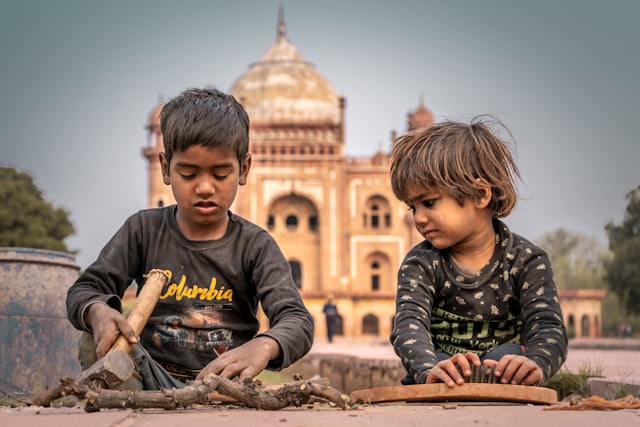


Carry on M.'s work
Support National Foundation for India (NFI)Other changemakers
See all → C. SubramaniamNational Foundation for India (NFI)
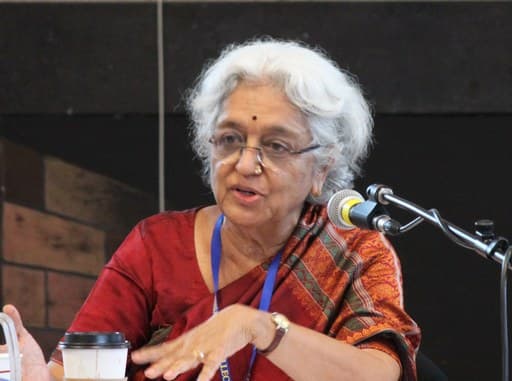 Devaki JainNational Foundation for India (NFI)
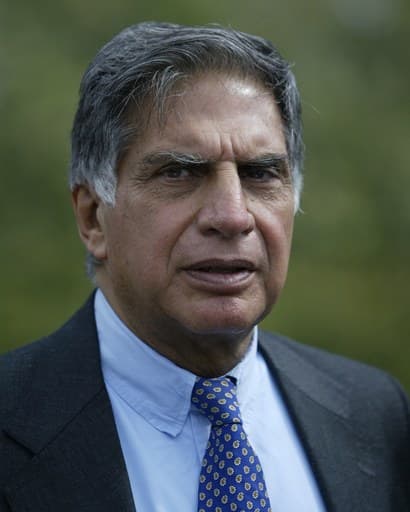 Ratan TataNational Foundation for India (NFI)
 Verghese KurienNational Foundation for India (NFI)
 Bindeshwar PathakSulabh International
 Sanjay KumarAashray Adhikar Abhiyan (AAA)
 Kalki SubramaniamSahodari Foundation
 Madhavi KukrejaVanangana
 Arbind SinghNIDAN
 Aruna RoyMazdoor Kisan Shakti Sangathan (MKSS)
 Krishnavatar SharmaAajeevika Bureau
 Monisha BehalNorth East Network