
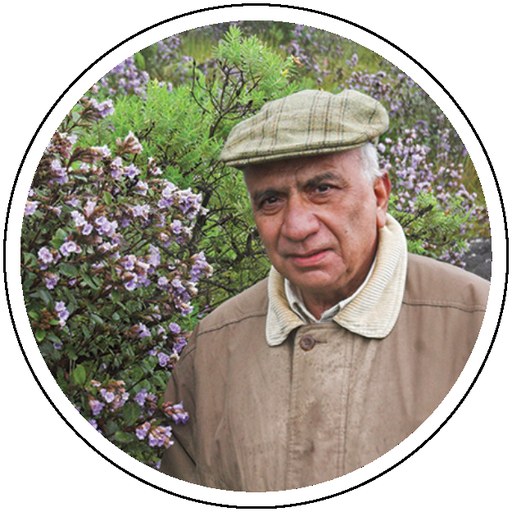
Ashok Kumar
FounderFounder of Wildlife Trust of India
Ashok Kumar is the founder of Wildlife Trust of India (1998)[1], an Indian non-profit working on animals and environment from Noida.
Ashok Kumar (1935 - 18 August 2016) was an Indian conservationist who spent five decades on the illegal wildlife trade, and who is widely described within the field as the person who established wildlife crime as a category of enforcement in India. He was a founder and chairman emeritus of the Wildlife Trust of India.
His interest began while he was working for Tata Steel in eastern India and travelling through the forests of the region, particularly Simlipal. Still in that job, he lobbied for the creation of the Dalma Wildlife Sanctuary near Jamshedpur, which was notified in 1975 largely through his efforts. A decade working in the Middle East followed, during which he helped establish the Dubai Natural History Society and found that Dubai was a major transit point for wildlife products, the discovery that shaped the rest of his career.
He joined WWF India in 1990 specifically to build the country's first body investigating the illegal wildlife trade. The Wildlife Trade Monitoring Unit he created became TRAFFIC India a year later, and its investigations produced a series of seizures of fur, bone and ivory. A raid at Majnu-ka-Tila in Delhi, still the largest seizure of tiger bones recorded in India, showed for the first time the scale of international demand for tiger bone as well as skin, and helped precipitate the national response on tiger protection. He often worked undercover himself, posing as a buyer, and took part directly in the arrest of poachers and traders.
He was a consultant to the Ministry of Environment and Forests from 1992 to 1997 and member secretary of the Supreme Court-appointed committee whose recommendations included the creation of a national wildlife crime control bureau. He represented India on CITES delegations for more than twenty-five years, helped found the intergovernmental Global Tiger Forum, and served on the Project Tiger steering committee and on the IUCN cat and Asian elephant specialist groups. Without legal training he became a persistent litigator, filing public interest petitions and arguing cases in the Delhi High Court, among them actions that protected wetlands in Uttar Pradesh from a World Bank-funded project, moved an irrigation colony out of Corbett National Park, and kept the wildlife trade organiser Sansar Chand in custody.
In 1998 he helped set up the Wildlife Trust of India, which he shaped for the following eighteen years until his death at the age of 81.[2][3]
Wildlife Trust of India
Wildlife Trust of India works on wildlife conservation, habitat protection and human-wildlife conflict mitigation. It runs species recovery, rescue and anti-poaching programmes across the country.
Wildlife Trust of India reports the following, on its own site:
- 25+ years of wildlife conservation
- Projects across 23 states


Carry on Ashok's work
Support Wildlife Trust of IndiaOther changemakers
See all → Tara GandhiWildlife Trust of India
 Thomas MathewWildlife Trust of India
 Vivek MenonWildlife Trust of India
 Bibhab TalukdarAaranyak
 Geeta SeshamaniWildlife SOS
 Atmaram PandurangBombay Natural History Society
 Bharathidasan SubbaiahArulagam
 E. H. AitkenBombay Natural History Society
 Sakharam ArjunBombay Natural History Society
 Snehal PatelNature Club Surat
 Neha PanchamiyaRESQ Charitable Trust
 Suparna Baksi GangulyCUPA - Compassion Unlimited Plus Action