
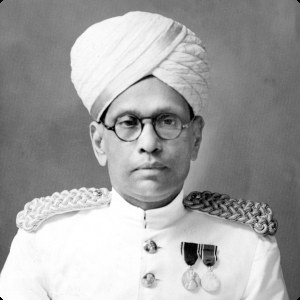
Mutha Venkatasubba Rao
FounderFounder of The Madras Seva Sadan
Mutha Venkatasubba Rao is the founder of The Madras Seva Sadan (1928)[1], an Indian non-profit working on education, women & children, elderly and arts & culture from Chennai.
Sir Mutha Venkatasubba Rao (18 July 1878 – 30 December 1960) was an Indian lawyer, judge and philanthropist. With his wife Andal Venkatasubba Rao he founded The Madras Seva Sadan in 1928, a charitable institution in Madras (now Chennai) established to shelter, train and educate destitute women and children.
He served for about seventeen years as a judge of the Madras High Court, retiring in 1939 as its acting Chief Justice, and afterwards as the first Agent of Berar in the dominion of the Nizam of Hyderabad.
Early life and education
Venkatasubba Rao was born on 18 July 1878 at Akividu in West Godavari district. He was educated at Madras Christian College and took his B.L. degree, after which he was apprenticed to the jurist C. V. Kumaraswami Sastri.
Legal career
He was enrolled as a vakil in July 1903 and in July 1904 formed a partnership with his college contemporary Radhakrishnaya, practising as Venkatasubba Rao and Radhakrishnaya. He built his practice largely on the Original Side of the Madras High Court.
On 1 November 1921 he was appointed a puisne judge of the Madras High Court, the first practitioner from the Original Side to be raised to the bench and the youngest person to sit on it. He retired in 1939 as acting Chief Justice, and was then appointed the first Agent of Berar, a province under the Nizam of Hyderabad. He also sat on the Delimitation Committee.
The Madras Seva Sadan
The origins of the institution lay in the Women's Home of Service, the social service arm of the Women's Indian Association, of which Andal Venkatasubba Rao was honorary secretary. When Margaret Cousins left India in 1928 and the Poona Seva Sadan Society took charge of the Home with a donation of 750 rupees but was unwilling to spend further, Venkatasubba Rao gave 10,000 rupees from his own fortune, establishing The Madras Seva Sadan.
The Sadan began in a rented house in Mylapore as a home for poor and destitute girls and young women, including deserted wives, widows and orphans, and grew into a group of schools, hostels, vocational institutions, a children's home and an old age home across four campuses in Chennai. Venkatasubba Rao served as its president, and gave away a large part of his wealth to it. He campaigned for the rights and status of women in Hindu society.
He died on 30 December 1960 at the age of 82. The Sir Mutha Venkatasubba Rao Concert Hall in Chetpet and several schools run by the Sadan carry his name.
Recognition
The Madras Seva Sadan
Founded in 1928 by Sir Mutha Venkatasubba Rao — the youngest judge of the Madras High Court — and Lady Andal with Rs 10,000 from their personal fortune, The Madras Seva Sadan grew from a rented house in Mylapore into four campuses across Chennai. Registered as an independent society in 1940, it today runs schools including the Madras Seva Sadan Higher Secondary School for Girls, Sir Mutha School and Lady Andal School, the Prem Vihar children's home, the Shanthi Sadan assisted-living home for elderly women, learning centres for children with learning difficulties, sports facilities and the 1,200-seat Sir Mutha Venkatasubba Rao Concert Hall.
The Madras Seva Sadan reports the following, on its own site:
- 15 institutions across 4 campuses, including 6 schools educating over 4,000 students
- A 73,000 sq.ft. home for children and a 35,000 sq.ft. old age home for women


Inspired by Mutha's work?
Support The Madras Seva SadanOther changemakers
See all → Andal Venkatasubba RaoThe Madras Seva Sadan
 C S LakshmiSPARROW (Sound & Picture Archives for Research on Women)
 Shaheen MistriTeach For India
 Rohini NilekaniPratham Books
 Anand MahindraProject Nanhi Kali
 Badruddin AjmalAjmal Foundation
 K. Anji ReddyDr. Reddy's Foundation
 Kaifi AzmiMijwan Welfare Society
 Kailash SatyarthiKailash Satyarthi Children's Foundation
 Madhu Pandit DasaThe Akshaya Patra Foundation
 Rippan KapurCRY - Child Rights and You
 Safeena HusainEducate Girls