
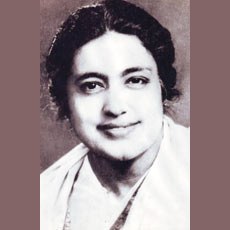
Fathema Ismail
FounderFounder of Society for the Education of the Challenged
Fathema Ismail is the founder of Society for the Education of the Challenged (1958)[1], an Indian non-profit working on disability, education and women & children from Mumbai.
Fathema Ismail (1903-1987) was an Indian social worker and legislator who founded a group of institutions in Bombay for the treatment, rehabilitation and education of children disabled by poliomyelitis. In 1958 she founded the Society for the Education of the Crippled (Child and Adult), since renamed the Society for the Education of the Challenged, which runs day schools and a residential school in and around Mumbai.
Her work began after her young daughter contracted polio in the 1940s and she found that there were almost no treatment facilities in India. She was awarded the Padma Shri in 1958 and was a nominated member of the Rajya Sabha from 1978 to 1984.
Early life and education
Ismail was born on 4 February 1903. She was a sister of Umar and Usman Sobhani, Bombay cotton merchants who financed the Khilafat movement and the Congress party. She studied medicine in Vienna in the early 1920s but returned to India without completing the course. She married Mohammad Hasham Ismail, a government trade commissioner.
Before turning to disability work she taught at an industrial training centre for women, was a founder member of the All India Village Industries Association, and served as secretary of the Simla branch of the All India Women's Conference in 1936. She was associated with the independence movement and sheltered activists at her Bombay home.
Career
In the mid-1940s her three-year-old daughter Usha contracted poliomyelitis. Finding no adequate treatment available in India, Ismail set about creating it. She opened a physiotherapy and rehabilitation centre for infantile paralysis and, in 1947, registered the Society for the Rehabilitation of Crippled Children, whose first clinic opened at Chowpatty in Bombay. With land near the Haji Ali racecourse obtained through the intervention of Jawaharlal Nehru, she opened a dedicated children's orthopaedic hospital in the early 1950s, described as the first of its kind in India.
In 1958 she founded the Society for the Education of the Crippled (Child and Adult), contributing Rs 40,000 of her own money to start a school. The first batch had thirteen pupils, taught in Marathi and Gujarati, and the school was initially housed in army barracks and then in a scout and guide hut at Dhobi Talao. It was recognised by the Bombay Municipal Corporation in 1963, and in 1965 the corporation's education department provided rooms in the Agripada municipal school building. The society, now called the Society for the Education of the Challenged, operates day schools at Agripada, Pratiksha Nagar and Khar Danda and a residential school, together with an integration and inclusion programme.
Recognition
Society for the Education of the Challenged
The Society for the Education of the Challenged (Child and Adult) was founded in Mumbai in 1958 by Fathema Ismail, whose own daughter was affected by polio. It began with thirteen students in a scout hut at Dhobi Talao and received Bombay Municipal Corporation recognition in 1963. SEC now runs day schools at Agripada, Pratiksha Nagar and Khar Danda, a residential school at Naigaon, and an integration and inclusion programme.
Society for the Education of the Challenged reports the following, on its own site:
- SEC's residential Centre for Independent Living at Naigaon, on the Mumbai-Pune road, runs a primary school recognised as a special school by the Maharashtra Government with grant-in-aid for 40 children, alongside a hostel that can house around 50 children in two boys' dormitories and one girls' dormitory.
- A wheelchair distribution camp organised on 26 July 2025 benefited 46 students of the Society for the Education of the Challenged across its Mumbai units - 17 at Agripada, 13 at Khar Danda and 16 at Wadala.



Carry on Fathema's work
Support Society for the Education of the ChallengedOther changemakers
See all →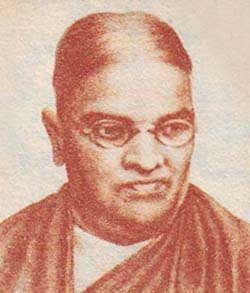 Ramabai RanadePune Sevasadan Society
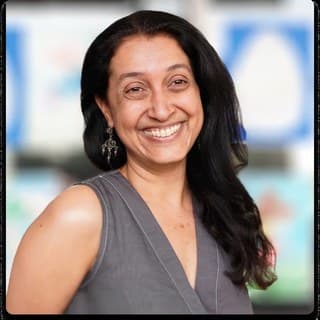 Shaheen MistriTeach For India
 Anand MahindraProject Nanhi Kali
 Badruddin AjmalAjmal Foundation
 K. Anji ReddyDr. Reddy's Foundation
 Kaifi AzmiMijwan Welfare Society
 Kailash SatyarthiKailash Satyarthi Children's Foundation
 Madhu Pandit DasaThe Akshaya Patra Foundation
 Rippan KapurCRY - Child Rights and You
 Safeena HusainEducate Girls
 Shantilal MutthaBharatiya Jain Sanghatana
 Anita GurumurthyIT for Change