
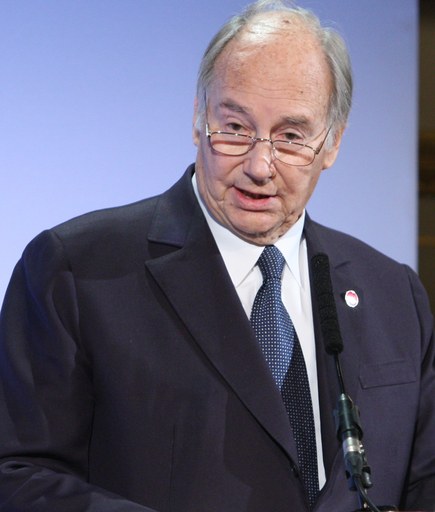
Aga Khan
FounderFounder of Aga Khan Rural Support Programme (India)
Photo: Wikimedia (CC BY-SA)
Aga Khan is the founder of Aga Khan Rural Support Programme (India)[1], an Indian non-profit working on rural & agriculture, livelihood and water & sanitation from Ahmedabad.
Prince Shah Karim al-Hussaini, Aga Khan IV (13 December 1936 - 4 February 2025), was the 49th hereditary Imam of the Nizari Ismaili Muslims and the founder of the Aga Khan Development Network. He died in Lisbon, Portugal, on 4 February 2025, aged 88.
In India he founded the Aga Khan Rural Support Programme (India), or AKRSP(I), which was established in Gujarat in 1983 as part of the twenty-fifth anniversary of his imamate. It is a non-denominational, non-governmental development organisation and part of the Aga Khan Development Network.
Early life and education
He was born in Geneva, Switzerland, on 13 December 1936. He was educated for nine years at the Institut Le Rosey in Switzerland and then at Harvard University, where he read Islamic history and graduated with a BA cum laude in 1959. He succeeded his grandfather as Imam in 1957, at the age of twenty.
Career
He founded the Aga Khan Development Network, a group of more than 200 affiliated agencies employing some 80,000 staff and working on health, education, culture and rural development across Africa, South and Central Asia and the Middle East.
The Aga Khan Rural Support Programme (India) was set up in 1983 to act as a catalyst for rural development by supporting local communities directly. It works in more than 3,000 villages in Gujarat, Madhya Pradesh, Bihar and Maharashtra and states that it has affected the lives of more than 3.5 million people. More than 80 per cent of the households it works with belong to marginalised communities, including tribal people, dalits and minorities, and more than 60 per cent of those it reaches are women. Its work covers agriculture and climate resilience, work and enterprise, and the building of community institutions for financial inclusion, livelihoods and rural governance.
Recognition
Aga Khan Rural Support Programme (India)
AKRSP(I) works with marginalised rural communities across more than 3,000 villages, building people's institutions for water and irrigation management, sustainable agriculture, women's empowerment, primary education and rural livelihoods.
Aga Khan Rural Support Programme (India) reports the following, on its own site:
- 7,00,000 households reached
- 3,255 villages across 66 blocks
- 19,300 community-based groups formed
- Working in 27 districts across 4 states
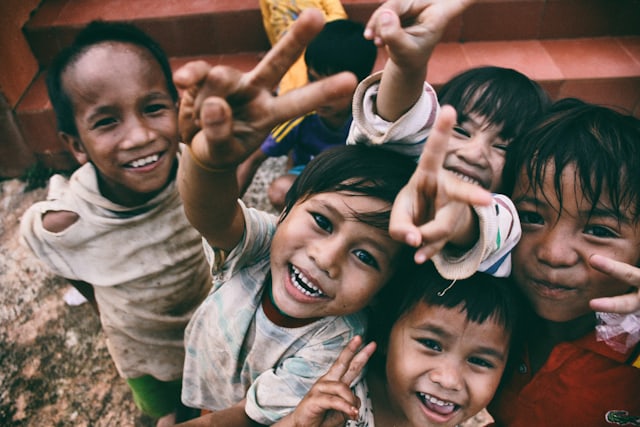

Carry on Aga's work
Support Aga Khan Rural Support Programme (India)Other changemakers
See all → Aamir KhanPaani Foundation
 Kiran RaoPaani Foundation
 Ronnie ScrewvalaSwades Foundation
 Zarina ScrewvalaSwades Foundation
 Babul PrasadIntegrated Development Foundation (IDF)
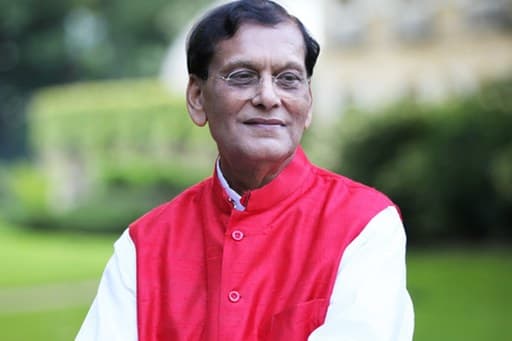 Bindeshwar PathakSulabh International
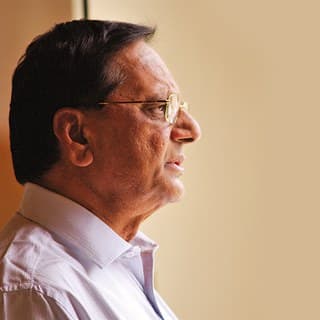 K. Anji ReddyDr. Reddy's Foundation
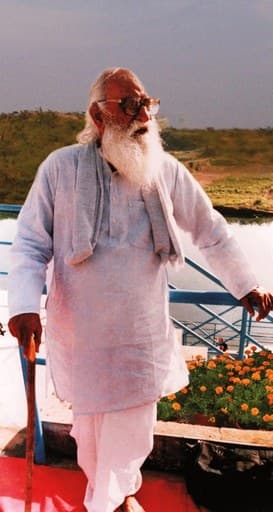 Nanaji DeshmukhDeendayal Research Institute
 Prema GopalanSwayam Shikshan Prayog
 Sanjay KumarAashray Adhikar Abhiyan (AAA)
 Babasaheb DeshmukhSanskriti Samvardhan Mandal
 BV Parameswara RaoBhagavatula Charitable Trust (BCT)