
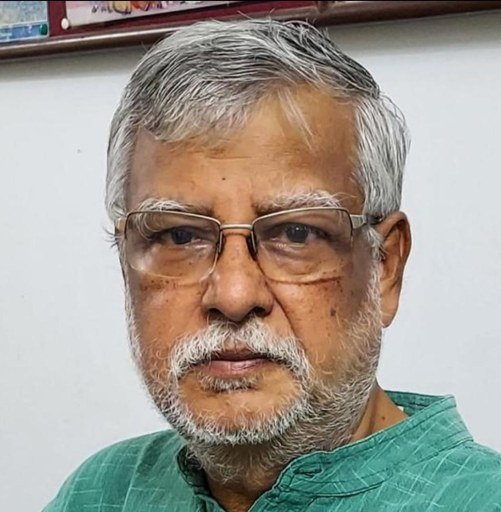
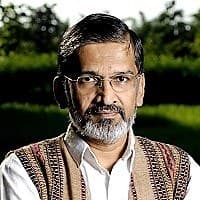
Achyut Das is the founder of Agragamee[1], an Indian non-profit working on tribal welfare, rural & agriculture and livelihood from Rayagada.
Achyut Das is an Indian development activist and the founder director of Agragamee, a non-profit organisation working with tribal communities in the southern districts of Odisha. He founded the organisation with his wife Vidhya Das in 1987 and serves as its secretary cum director. Agragamee has its head office at Kashipur in Rayagada district, with a further office in Bhubaneswar.
Career
Agragamee works with what it describes as the poorest and most deprived communities in Odisha, combining socio-economic development with awareness-raising and education. Its stated vision is a world without hunger and injustice, and its mission is to promote holistic tribal development. Its programmes cover girls' education through the Agragamee School and the Mukta Gyana Kutir residential centres, ecological and indigenous farming, conservation of traditional seed varieties, community learning centres, skills training and livelihoods, and the promotion of community-based organisations and farmer producer organisations.
Das and his wife have worked in the Kashipur area for more than three decades. During work against bonded labour in the 1980s he was physically attacked and seriously injured by landowners in the region, and the organisation has faced sustained opposition from local interests over the years.
He has served as a member of the Odisha State Planning Board and as chairperson of the State Resource Centre at Rayagada, and is an author. Much of his work has been directed at literacy among tribal communities in Rayagada district, an effort that began in the early 1990s.[2][3][4]
Agragamee
Agragamee has worked since 1981 on tribal and rural development in Odisha, combining sustainable agriculture, education and women's livelihoods with rights-based advocacy to address poverty and hunger among Adivasi communities in Kashipur and beyond.
Agragamee reports the following, on its own site:
- 12,500 villages using the RTI Act for crucial development information
- 10,250 farmers conserving traditional crop varieties
- 8,750 tribal families self-sufficient with productive family farms
- 4,200 tribal children reading fluently and studying further


Inspired by Achyut's work?
Support AgragameeOther changemakers
See all → R. BalasubramaniamSwami Vivekananda Youth Movement
 Mar Mathew ArackalPeermade Development Society
 Dr. Sandeep SharmaSAMARPIT - Centre for Poverty Alleviation & Social Research
 Eknathji RanadeVivekananda Kendra
 K. Anji ReddyDr. Reddy's Foundation
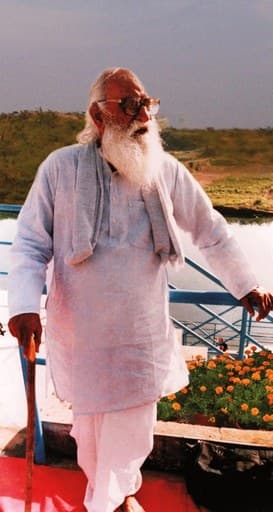 Nanaji DeshmukhDeendayal Research Institute
 Prema GopalanSwayam Shikshan Prayog
 Aamir KhanPaani Foundation
 Kiran RaoPaani Foundation
 Sanjay KumarAashray Adhikar Abhiyan (AAA)
 Abhay BangSEARCH
 Babasaheb DeshmukhSanskriti Samvardhan Mandal